


Turning Pages, Turning Lives: A Sea of Support for Cheryl Johnson’s Youth Reading Program on Bequia
From adversity to advocacy, how one person’s devotion is changing children’s lives
A Bathroom that Pulls at Your Heartstrings
No one who enters that bathroom at the Fig Tree Restaurant in Bequia, a tiny island in St. Vincent and the Grenadines, for the first time, expects to leave in tears. But it happens.
The walls are decorated with children’s handwritten letters bearing messages of pure gratitude for “Mrs. Johnson’s reading club.”
That woman is Cheryl Johnson. She is a community leader, educator, entrepreneur, and is beloved by all. She’s also quite busy, with two children, seven grandchildren, two great grandchildren, plus a restaurant and reading program to manage.
In a world where communities are becoming more fragmented and kids are denied the support they need, this program is a breath of fresh air.

Turning Adversity into Possibility
While Cheryl has called Bequia her home for nearly two decades, her roots trace back to the main island of Saint Vincent.
Growing up as a Vincentian in the 1960s, when the island was controlled by the British, brought challenges that shaped Cheryl into the influential leader she is today.
When Cheryl was only a few years old, her mother died while giving birth to two children. One child died during the birth and the other, Gilda, was adopted by Gilbert and Joyce Millar in Barbados.
Gilda’s adoptive father, Gilbert, was the principal of the top secondary school in Saint Vincent, The Boys Grammar School. Gilda went on to study at the London School of Fashion and now straddles the world of fashion design between France and Martinique.
As for Cheryl, after the death of her mother, she was raised by her grandmother.
At a very young age, she became a primary school teacher but was forced to resign when she had a child outside of marriage—a regulation that was mandated under the British education system at the time.
Suddenly unemployed as a young single mother, her foundation slipped even further when her grandmother died.
Cheryl reflects, “In those days it was hard, it was hard to raise a child when you’re a child yourself.”
Then, on April 13th, 1979, a series of abrupt volcanic explosions blasted mushrooms of ash plumes 12 miles high over Saint Vincent. That heavy ash rained down and blanketed the entire island, forcing about 20,000 people to evacuate their homes in the northern villages, the area closest to the eruption of La Soufriere.
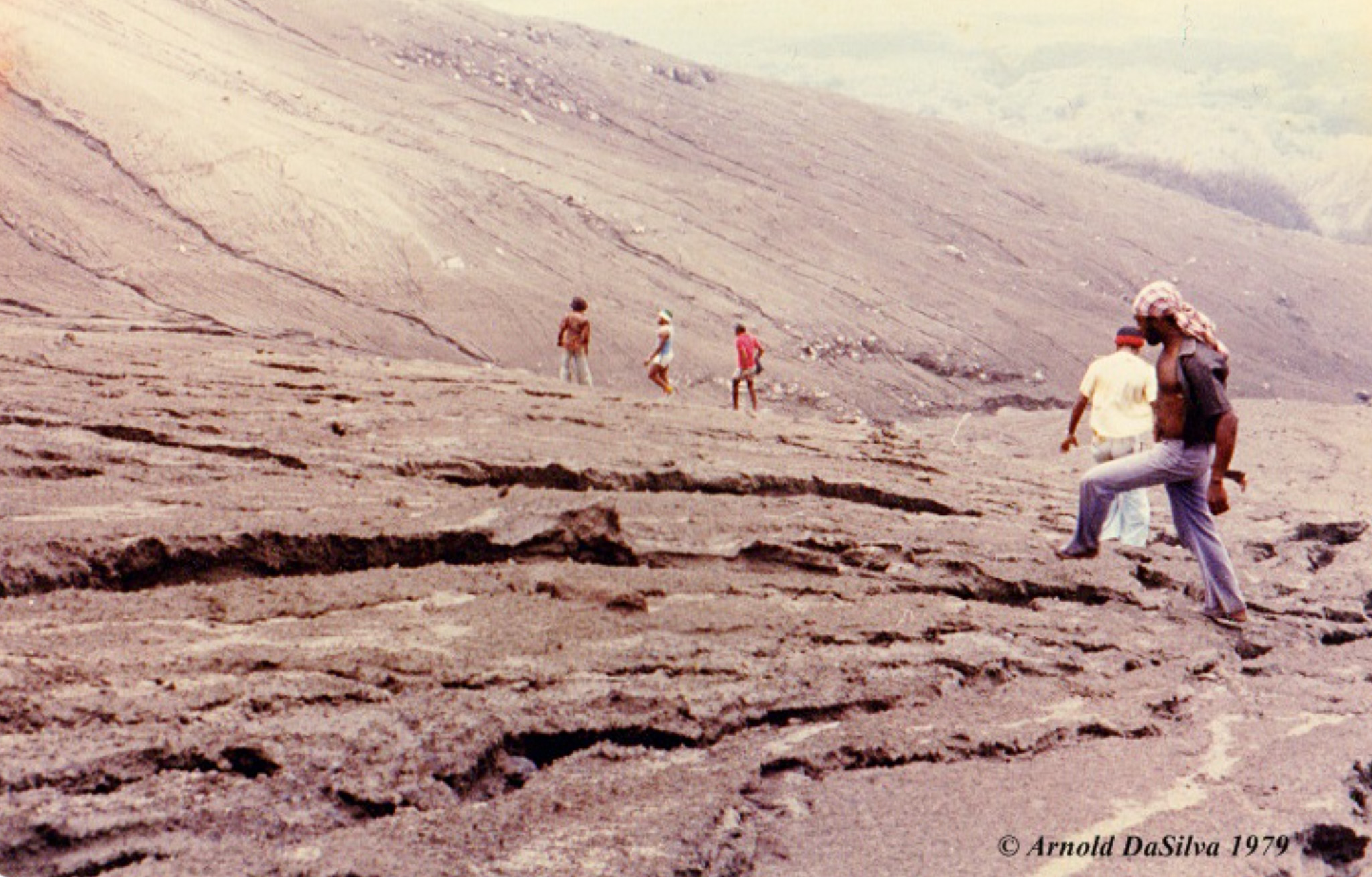
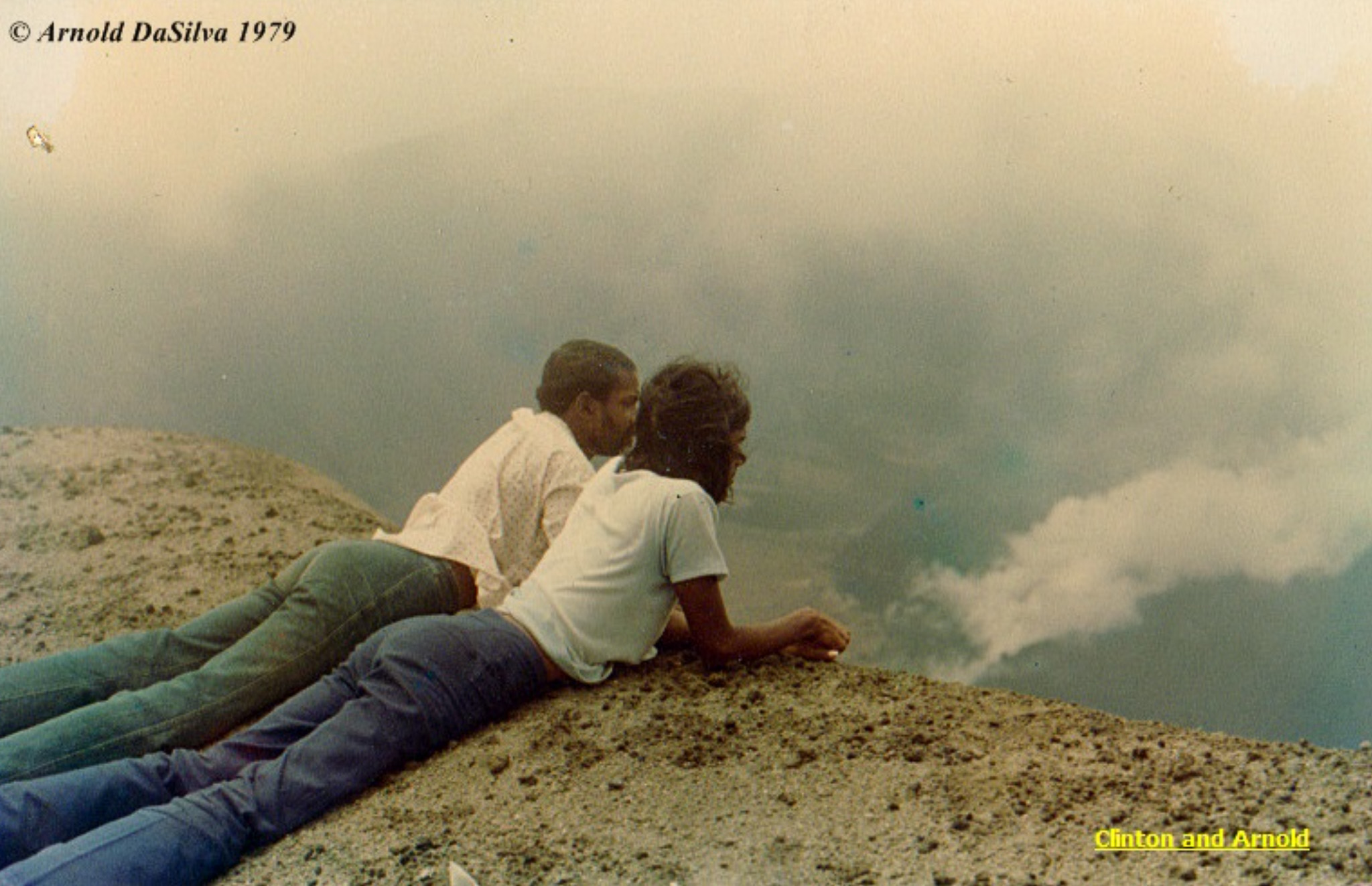

Like thousands of others seeking refuge, Cheryl and her daughter had to abandon their home and relocate to Kingstown, the capital city in the densely populated south, where friends and family took in evacuees until their villages became habitable again.
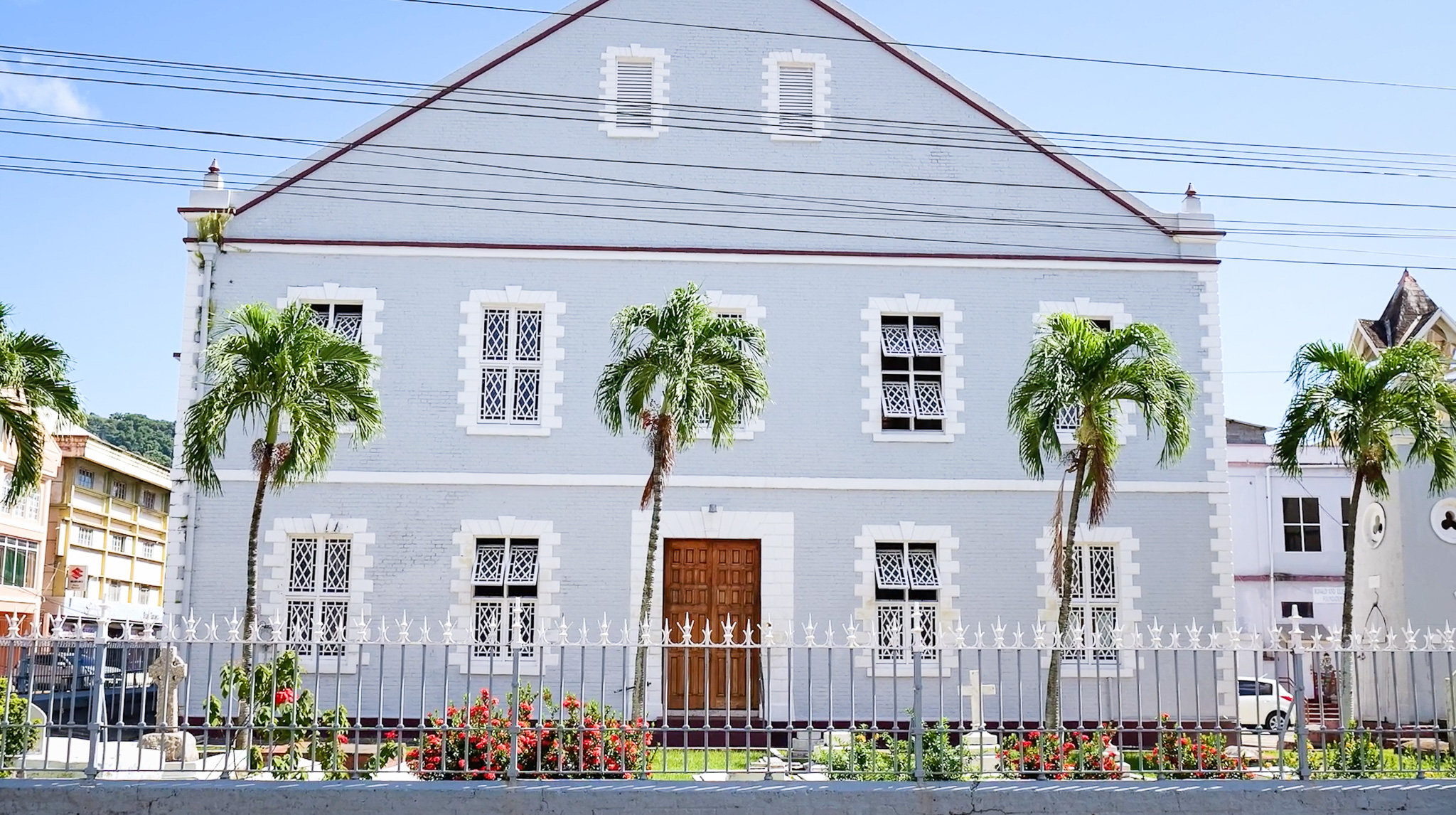
The Kingstown Methodist Church was one of 63 evacuation centers that housed an estimated 15,000 displaced persons. These public facilities were not equipped to provide housing, especially to thousands of people, which led to harsh and unsanitary living conditions.
Cheryl dove headfirst into helping the community get back on their feet by regularly volunteering at the church and connecting the displaced with projects and job opportunities.
Equally important, she kept “the spirit alive” by arranging musical gatherings—something she continues to this day at her restaurant on Bequia, where she hosts talented local musicians, igniting the soul of Vincentian culture with the smooth vibes of folk and calypso jams.
In a straightforward manner, Cheryl asserts, “Working with community is what I know, I don’t need any particular training to help communities move themselves from maybe sitting down or leaning up to get going. I can do that. Because I love people and people love me. I don’t know anything else.”
Upon Cheryl’s return to her village a year later, she started a preschool for local children, continuing her journey as an educator.
Impressed by the work Cheryl was undertaking, the government hired her as a Community Development Officer.
Bridges, roads, schools, and community centers. These are just some of the contributions Cheryl has made to Saint Vincent over the years.
A Leap Across the Bequia Channel
Then one day Cheryl got an important call. She was asked to come to Bequia to manage the island’s bookshop—an opportunity she couldn’t turn down.
“It was one of the most fantastic bookshops in the region. I was proud to work there.”
It’s only an hour’s ferry ride south across the Bequia Channel, yet it feels worlds apart from the bustling industries of Saint Vincent. Bequia, an island in the Grenadines no larger than seven square miles, hugs all visitors with its quaint Caribbean charm.
Steeped in maritime history dating back to the early 1800s, it became a whaling center when New England whalers introduced their techniques to Bequia residents, significantly expanding the culture and influence of seamanship.
Over the years, thousands of sailors have dropped their hook in Bequia’s Admiralty Bay, and consequently, the Bequia bookshop catered to this transient crowd. From sailing charts, scrimshaw, and nautical flags to books about knots and marine life, the bookshop had it all.

But as Cheryl worked in the bookshop day after day, she noticed that the local children never wandered into the store. Concerned and curious, she asked the children if they were members of the Bequia Library.
They were not.
Cheryl thought to herself, “this could be a deficit.”
“Sadly…,” Cheryl pauses and continues hesitantly, “in our culture, not many people would buy books—like storybooks.” Reinforcing the community’s commitment to education, she affirms, “They will buy all the textbooks the children need for school, which are costly and poor families can’t always buy all of them.”
After confirming her suspicions, Cheryl got an idea. “I asked the children if I were to start a reading program on the weekends, would they come?” Cheryl recalled, “And on the 19th of November, 2006, five children came.”
Written in an old notebook, Cheryl still has the first attendance record for those children: Kimberly Wallace, Barry Farrell, Devery Ollivierre, Jamaica Ollivierre, and Aaliyah Peters.

Seventeen years later the reading program is still going strong.
The program now sees its second generation, with the children of the original members continuing the tradition.
Program alumni have pursued higher education and international careers, including university studies in the United States and work in Taiwan. Locally, many now contribute significantly to the community, with careers in the revenue office, post office, and tourism industry.
Not just local children, but visiting kids from sailboats and hotels also benefit from the Saturday reading program.
Cheryl generously self-funds the program’s essentials, dedicating her time, providing supplies, and offering snacks and drinks for the children. And while donations are always welcome, she asks for nothing in return.
“I just want people to be smart,” Cheryl reflects, “If you are smart, you will reason and have discussions instead of ignorant arguments. My goal in life is to see if I can impact that into a positive.”
Cheryl’s work with the community has expanded over the years. The Johnsons run the “Cruiser’s Net,” a series of local announcements on VHF radio that broadcasts to all the sailors who’ve anchored in Bequia’s Admiralty Bay. They promote local events and coordinate boat-to-boat services for gas, baguettes, laundry, ice, you name it. One could argue that it’s the most hospitable cruiser’s net in all the Caribbean.
One of the largest events of the year for sailors is the Bequia Christmas Day Cruiser’s Potluck. And who hosts it? Cheryl, of course.
Niki Fox Elebaas and her husband are full-time cruisers living aboard their catamaran, SV Grateful. They’ve built a strong friendship with the Johnsons over the years while sailing the windward isles.
Niki continues, “She encourages yachties to use the restaurant and its barbecues for a combined celebration. After noticing many national flags in the crowded harbor, my husband and I translated Cheryl’s invitation into Español, German, Français, and Dutch. We wound up that year with nearly 70 cruisers from all over the world gathering together with Cheryl and her family to celebrate!”
And the hospitality has borne unexpected fruit. Many sailors spend their Saturday afternoons reading with the local kids.
John and Darcy, a sailing couple who recently sold their boat, ‘Kindred Spirit,’ have been instrumental in the program’s growth. They consistently donate supplies and spread information about the volunteer opportunity throughout the Bay and across the Caribbean.
“I must give a shout out to the cruisers,” Cheryl pauses and then explains, “Had it not been for the cruisers, the reading program would not be in existence. For all of the program’s seventeen years, when they are in the bay, they are at the Fig Tree.”

A Simple Program with Substantial Outcomes
It’s quarter past two in the afternoon and the kids finally arrive, shyly making their way to the back of the restaurant, their faces light up with huge smiles when they see Cheryl.
One by one, she welcomes them with the warmest embrace. They politely step aside and wait for the volunteers to take initiative.
The volunteers pair up with a child. And since these sailors visit Bequia for a month or longer, they’re able to work with the same child for multiple weeks—building on the previous session and adding a personal touch.
Reading, comprehension, and public speaking. These are the three main learning outcomes of the program.
The day starts at the bookshelves, where the children get to pick their first story.


Cheryl stresses that the book selection process is particularly sensitive. Volunteers must guide the children towards books that are challenging yet within their reading level without disparaging the child’s abilities.
Cheryl points out a crucial gap in the organization of the books—they lack categorization by reading level or age group. She’s eagerly seeking a volunteer to take on a project to color-code the spines of the books, so the volunteers can discreetly guide the children more effectively towards the right ones.
After the first book is chosen, the volunteers sit down with a child one-on-one (if there are enough volunteers) at one of the large wooden tables in the back of the restaurant.
When a child stumbles over a word or doesn’t understand a grammatical concept, the volunteer patiently explains and then encourages the child to demonstrate their understanding.
The positive and constructive feedback the children receive fuels their motivation to keep learning.
Then comes recall—the children grab some construction paper and crayons. They’re instructed to remember a scene from the book and draw it.
Mary Castle, a long-time program volunteer and resident of Bequia explains, “They are thinking about the story and making it up in their minds. That is another important skill that isn’t really stressed here in the Caribbean at school—the importance of creative art at a very young age.”
The children make their way over to the largest table to prepare for their book report—a very intimidating task for a child.
But they muster up the confidence to stand up in front of their peers and tell their story.
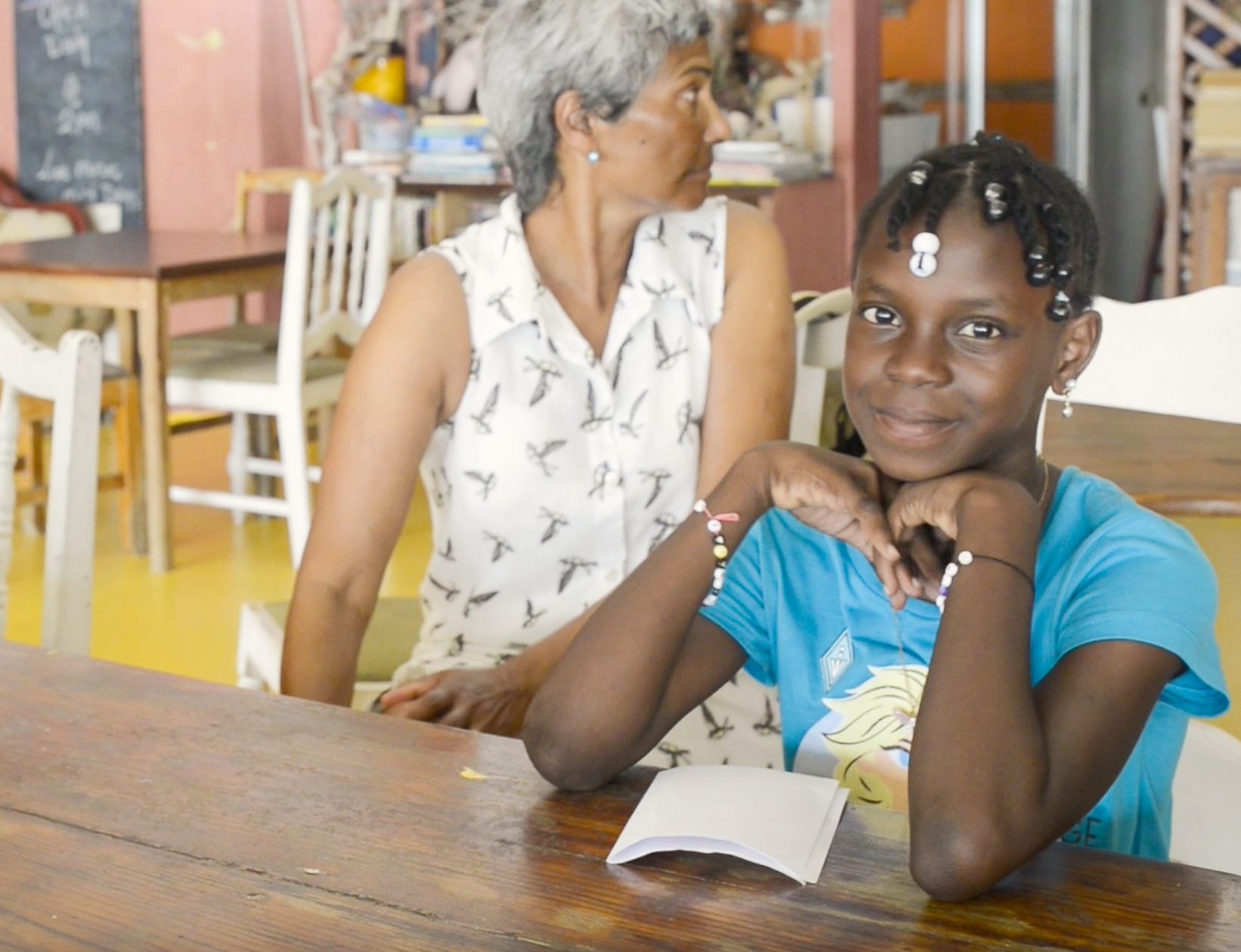
Mary continues, “So we are testing their reading skills, comprehension skills, and their public speaking skills. For some of the children this is a bit difficult, it can be daunting. But I think it’s a very good learning experience and they really do enjoy it.”
When asking one of the children their favorite part of the reading club they confirmed, “It’s very fun. You can read as many books as you want and then you can go up and do the book report, and this is the funnest part—when you are telling a story.”

Reading Gives One Power
“I believe that word is power. When you read you have the power to utilize words.”
She pauses. “Additionally, and more importantly, books can take you all over the world without you getting on a plane or on a boat.”
In small societies like Bequia, Cheryl explains that children don’t understand the ocean of possibilities that exist, and when asked what they want to be, she accounts, “They tell you the usual things. Hardly anybody would say that they want to be a marine biologist, and—just look around—we are surrounded by ocean.”
Teachers can immediately identify which children attend Cheryl’s program because they are able to stand up and speak confidently in front of other students. They are noticeably more articulate in school.
The program provides a support system that extends beyond the home, which is essential for creating a cohesive community network.
The United States National Research Council’s committee on ‘Integrating the Science of Early Childhood Development’ asserts that, “Children are born wired for feelings and ready to learn.”
It’s during the formative years of early childhood when the brain is developing critical neural pathways for learning and behavior. Constructive environments that allow children to explore, make mistakes, and interact with others cultivate adaptability and resilience—essential skills in today’s volatile political and technological landscape.
On the contrary, in the United States, the forces of modernization have rapidly changed the face of family life, community life, and the overall experience of adolescence. This has, according to the U.S. Department of Education, “weakened informal community support once available to young people”.
Bequia is home to about 1,200 children, yet only a small percentage benefit from the reading program. The initiative is straightforward yet profoundly influential in shaping the trajectory of a child’s future. It’s a simple blueprint that can be expanded in Bequia and the neighboring islands.
A Struggle for Equal Opportunity
Bequia only has two secondary schools—children have to travel one hour on the ferry to the main island of Saint Vincent to attend some of the top schools, and another hour to return. However, the alumni of Bequia’s secondary schools also excel significantly in their academics.
Who gets to attend those top schools? Well, it’s based on their entrance exam.
“If you score lower, you go to the lower quality school,” Cheryl explains. “But I believe if you score lower, you should go to the better school to enhance your skills.”
But that’s not how it works. In Saint Vincent and the Grenadines, at the age of eleven or twelve, your academic fate is decided by that entrance exam.
Those who are fortunate enough to attend the top schools on the main island benefit from nicer labs and better qualified teachers. But it can come with a major cost to families.
Hundreds of children wake up at 4:00 am to line up for the ferry at 6:30 am every day of the school week, and then return in the late afternoon.
Primary and secondary public education is free, but there are, of course, fees charged for the private secondary schools. Additionally, all families who send their children to Saint Vincent for school foot the bill for daily lunches, textbooks, ferry tickets, supplies, and uniforms—some poorer families can ill-afford this.
A 2021 study by UNICEF indicates that, “More than 1 in 3 or 38% of children ages 0-17 were living in poverty, which is slightly higher than the average for the Eastern Caribbean of 34%.
Changing the current system of placement exams may be a longer-term objective, but expanding the reading program and implementing a new scholarship to help remove the financial burden from poor families is something that can be done right now.
The Caribbean Youth Literacy Blueprint That Works
For seventeen years, Cheryl’s reading program has provided Bequia’s children with a safe learning environment while expanding their world views through the power of books.
She’s helped to shape young, capable leaders in Saint Vincent and the Grenadines.
The future vision for the reading program is clear, and there are many opportunities to pitch in and make it come to life.
Immediate Goals
The goals of the reading program include cataloging the books, establishing a financial scholarship for the children, and attracting more local volunteers.
Cataloging the Books
The program is in need of a volunteer to catalog the books according to reading level, using a discrete color-coding system on the spine that only volunteers understand. Selecting books is a delicate task, as each child needs guidance towards books that are challenging yet achievable, without causing feelings of inadequacy.
Establishing a Financial Scholarship
This scholarship would support families in Bequia who struggle with the costs of sending their children to secondary schools on Saint Vincent. It would also encourage participation in the reading program, therefore improving secondary school entrance exams, allowing more children to receive quality-education at the top schools on the main island.
Local Volunteers
While visiting sailors are the main volunteers of the program, when they head south for hurricane season, the program struggles to provide that one-on-one pairing with the children during these off-season months. Especially as the program expands, the increased participation of local volunteers is essential.

At the heart of the program is an impactful mission: to advance the education and prosperity of this vibrant island, starting with its children.
Want to be a part of the mission? Visit our website for information on how you can get involved and stay updated on our progress.
Want to see more? Watch the short documentary about Cheryl Johnson and her reading club filmed on Bequia.
Hurricane Beryl Update
On July 1, 2024, Hurricane Beryl strengthened to a Category 4 just before making landfall in Carriacou, causing unprecedented destruction to the island’s infrastructure and livelihood, as well as to nearby islands.
Although Bequia avoided Beryl’s direct path, many buildings were damaged, and one life was tragically lost. At the Fig Tree, the Johnsons faced an extended loss of electricity, causing spoilage of all their food stock. The restaurant also sustained damage to its water tanks, water pumps, roof, electrical and plumbing systems. After a temporary closure and countless hours put to repairs, the Fig Tree reopened August 17, 2024. Volunteers are encouraged to reach out and participate in the Saturday reading program and to donate supplies such as books, construction paper, and crayons for the children.
Watch the short documentary
Article by BORDERLESS, a global project sharing human stories that reveal universal truths.